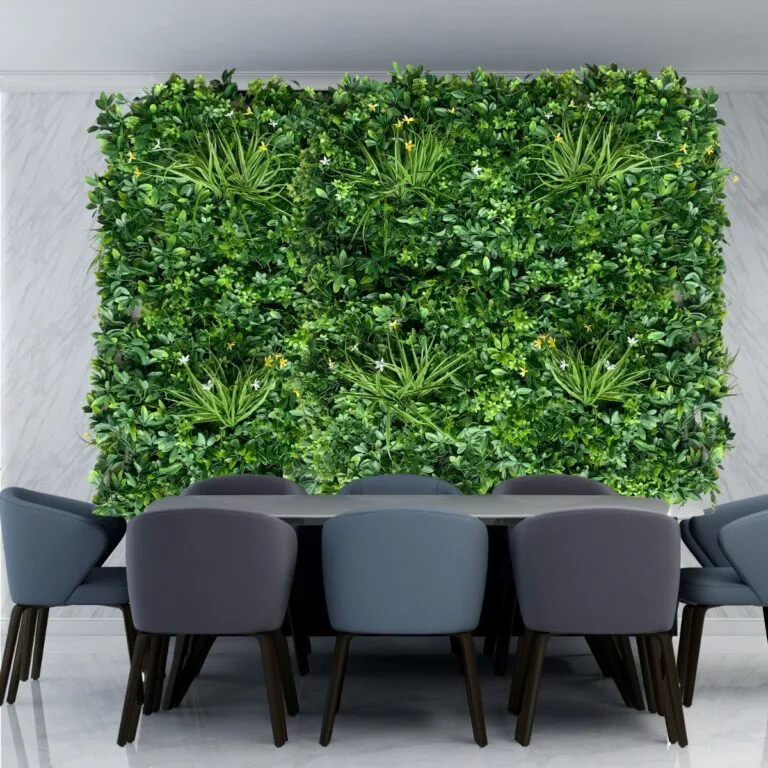

Artificial green wall panels are specified where a living wall’s operating requirements cannot be met — insufficient light, no irrigation route, no maintenance access, or a service life that does not justify horticultural upkeep. The ten applications below are the ones we see most often.
1. Office and workplace interiors
Open-plan offices use panels to break up large visual fields and to introduce acoustic absorption. The usual constraint is light: interior zones away from glazing cannot support living planting, which is where panels are specified instead.
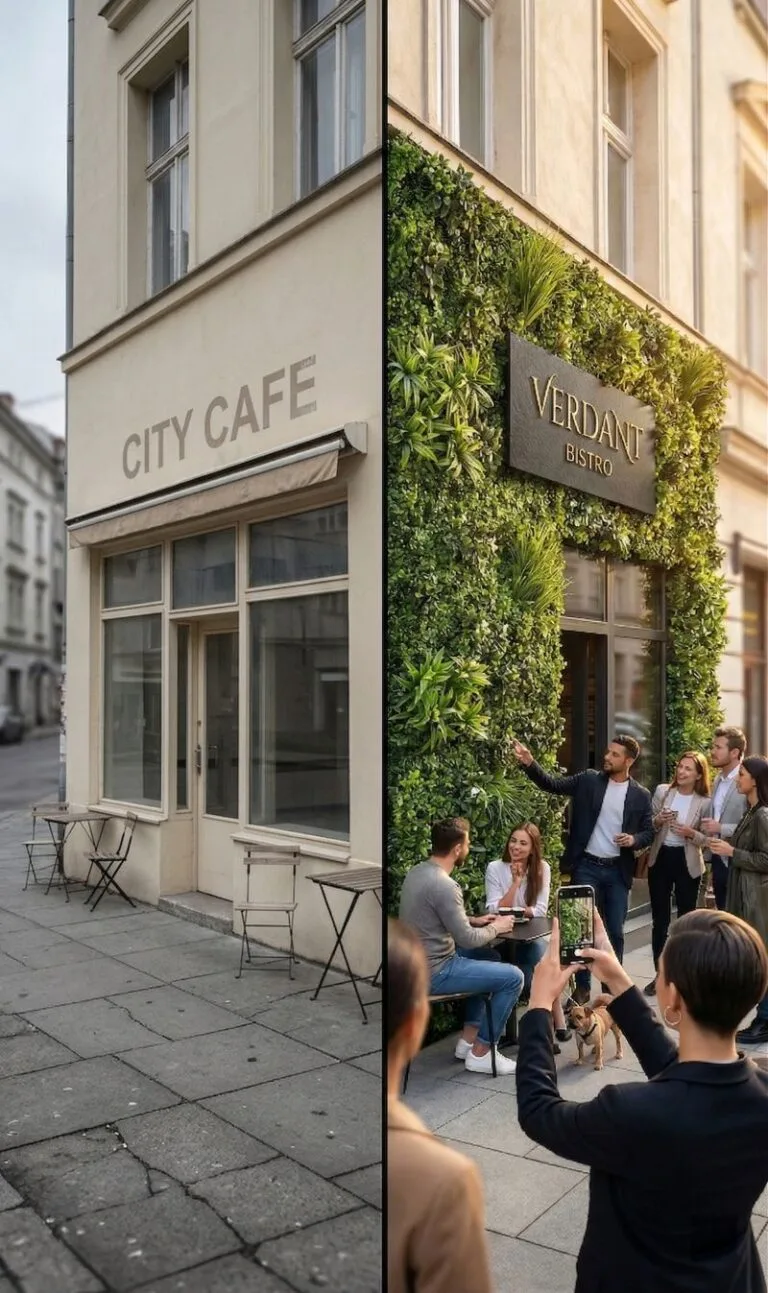
2. Restaurants and hospitality venues
Dining rooms and bars use green walls as a backdrop element. The operational advantage is that the installation does not compete with the kitchen or front-of-house team for attention — it requires cleaning, not care.
3. Residential interiors
Living rooms, hallways and home offices use panels where the client wants the visual effect without an irrigation system or a maintenance routine. Smaller panel formats are typically used here rather than full-wall installations.
4. Trade show and exhibition stands
Panels are used as temporary walling and as a photographic backdrop. They pack flat, install quickly, and can be reused across a season — which is the main reason they are preferred over live planting in this context.
5. Retail and shopping centre décor
Large-format installations in circulation areas and atria. The specification driver is consistency across a portfolio rather than a single site, since a chain cannot manage varying plant performance store by store.
6. Hotel lobbies and corridors
Hospitality projects use panels in arrival areas and upper-floor corridors where access for irrigation and horticultural service is difficult. Corridor installations in particular are usually specified in artificial because service access is the binding constraint.
7. Healthcare facilities
Waiting areas and treatment corridors. The design objective is a calming visual environment without introducing allergens, irrigation, or a maintenance presence in clinical space.
8. Residential balconies and terraces
Small-format panels are used for privacy screening and for greenery where wind exposure and irrigation access make living planting impractical.
9. Airport and transport lounges
High-ceiling, high-traffic spaces where maintenance access is expensive and disruptive. Panels are specified for the same reason as hotel corridors: service access, not aesthetics, drives the decision.
10. Educational institutions
Schools and universities use panels in circulation areas, libraries and study spaces. The recurring constraint is that no one on site is responsible for plant care, which makes a maintenance-free specification the practical choice.
How to choose between them
The application matters less than three specification questions: Can the location support living planting (light, irrigation, drainage)? Is there a maintenance owner? Does the design need to be identical across multiple sites? Where the answer to the first is no, or the second is nobody, the specification is usually artificial.
Project-level detail: commercial spaces, restaurants and retail and trade show stands. For panel formats, coverage per m² and lead times, start with the artificial green wall guide.